Featured Projects
A closer look at three projects: multi-format communication for an international research collaboration, and two citizen science projects spanning the full research cycle on plastic pollution on the Tuscan coast, Italy, and the Durance river, France.
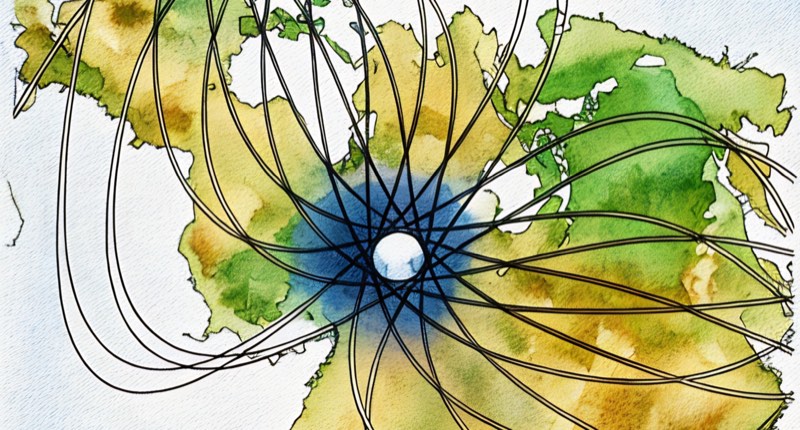
SWOT Adopt-A-Crossover (AdAC) Consortium & SWOT Adaptive Campaigns (AdaC)
Long-term science communication partner for two international oceanography initiatives tied to the SWOT satellite mission — spanning website copywriting, researcher interviews, and editorial production for a global scientific community.
- Campaign documentation — Created dedicated webpages and blogs for approximately 30 at-sea campaigns following SWOT's December 2022 launch
- Researcher spotlights — Interviewed early-career scientists, bringing the human side of oceanographic research to public audiences
- Publication highlights — Produced ongoing summaries of scientific outputs for non-specialist readers
- Event organisation — Co-organised FilaChange, a hybrid workshop spanning four countries with an in-person session in Paris
- Editorial support — Edited an outreach book featuring the consortium's early-career researchers
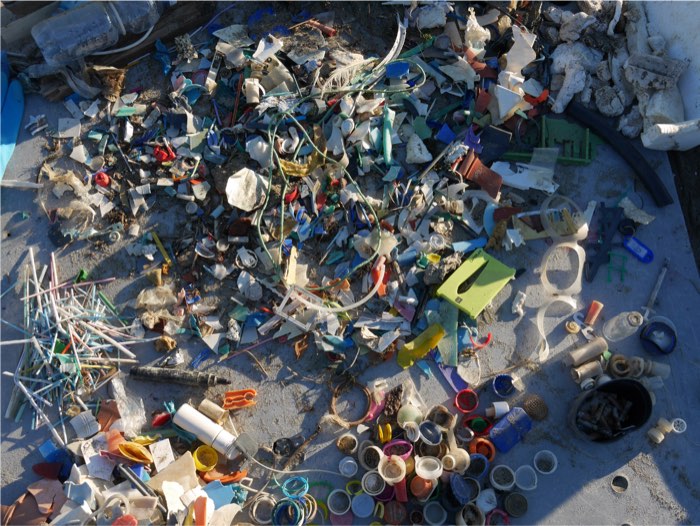
Profili Antropici – La plastica come misura del nostro tempo
End-to-end science communication and research coordination for a citizen science project investigating beach litter along the Tuscan Coast.
- Funding & design — Wrote the research proposal and designed the scientific protocol used to quantify plastic abundance across three beaches
- Citizen science training — Recruited and trained citizen scientists to collect standardised field data, bridging the gap between local communities and environmental research
- Municipal engagement — Facilitated two online meetings and one in-person session with three local governments, presenting field data directly to the decision-makers responsible for that coastline and investigating existing measures to reduce single-use plastic pollution
- Scientific publication — Analysed results and authored a book chapter published by Firenze University Press, following an academic workshop
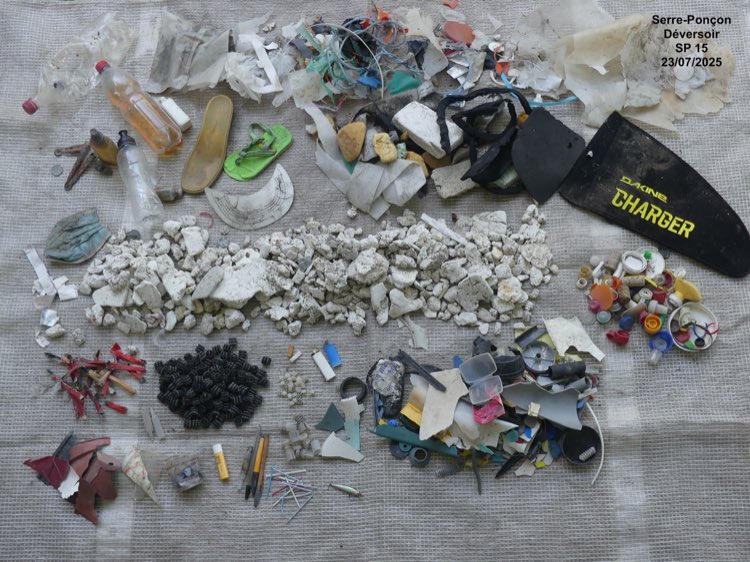
ZPLAST – Zéro Plastique en Méditerranée
Scientific coordination for a citizen science project revisiting the same Durance riverbank sites first surveyed with SPEM (2019–2020), tracking how macrolitter abundance has changed over five years.
- Funding & design — Co-applicant alongside France Nature Environnement PACA; designed the protocol using the official EU Marine Strategy Framework Directive methodology for EU-comparable results
- Citizen science training — Trained citizen scientists to collect standardised field data along the riverbank
- Municipal engagement — Presented the results to local policymakers at the project's closing meeting, coordinated by France Nature Environnement PACA
- Publication — Analysed results and presented them to the scientific community at the One Ocean Science Congress in Nice (2025, alongside UNOC3); data already published, peer-reviewed paper in preparation
All Projects
The complete list. Tap a project to see the full details.
2026 – ongoing
DISI – Divulgazione Innovativa per una comunità Sostenibile e Interattiva
Creating outreach and educational material on plastic pollution and its effects on human health, for school kids and teachers, for Semi di Scienza.
2025
SWOT and the New Wave of Oceanographers
SWOT is a next-generation satellite altimeter that brings a new perspective to ocean dynamics — fittingly, much of its early scientific discovery is being carried out by a new generation of oceanographers. Conducted and edited 53 interviews with these early-career researchers, as a tribute to the generation that will help chart the field's future, seen through the lens of the SWOT mission.
↗ Read the book
2025
People, Science and Instruments of the BioSWOT-Med Campaign
Created a dedicated blog for the BioSWOT-Med oceanographic campaign in the Mediterranean (April–May 2023), including three series of pre-departure interviews with the science team — on their research themes, their instruments, and early career researchers taking part — then updated the blog daily during the campaign with dispatches from the team at sea. At the end of the campaign, collected the material into this book, organised in four sections: the three interview series, plus a fourth gathering stories and anecdotes shared by the researchers while at sea. A complete record of the campaign — the science, the tools, and the people who made it happen.
↗ Read the book
2022 – 2026
A Buon Rendere – Molto più di un vuoto
Science and policy communication for Italy's national campaign advocating for a Deposit Return System (DRS) for beverage containers — a policy designed to increase collection rates and reduce container litter.
- Technical writing — Authored articles on deposit return systems in Italy and across Europe, translating policy and regulatory complexity into clear, accessible content for campaign audiences
- Data analysis — Analysed the data behind the campaign's brand-audit tracker (the ABR Radar) throughout the engagement
2021 – 2022
PlasticheAMare
A lighter-touch citizen engagement project with a colleague at the University of Pisa and the NGO Sons of the Ocean — designed the brand-audit protocol and trained volunteers to categorise macrolitter on Tuscan beaches, building on Sons of the Ocean's existing beach clean-ups. The protocol continued in use after the project ended.
↗ Visit project website
2019 – 2021
Marine litter and microplastics
Developed two outreach packages for this NORAD-funded UNEP project: awareness-raising materials for policymakers and government officials on strengthening plastic waste management, and educational materials for schools, fishing communities, and the public to promote behavioural change.
2019 – 2020
Stop Plastiques en Méditerranée (SPEM)
The first quantification of macrolitter abundance on the Durance riverbank — a baseline dataset that would later make it possible to track change over time when the same sites were revisited in ZPLAST (2024–2026).
- Funding & design — Helped write the research proposal and designed the scientific protocol used to survey the riverbank
- Citizen science training — Trained citizen scientists to collect standardised field data in the field
- Data analysis & publication — Analysed the results and authored a peer-reviewed paper documenting the findings
2020
VigiePlastique 2020
Scientific coordination and citizen-scientist training aboard the R/V Bonita for Expédition MED's 2020 survey — developing an onboard protocol that allowed citizen scientists to count and classify microplastics themselves during the campaign, as well as sampling floating microplastics and writing the mission report. That protocol was later adopted across subsequent Expédition MED campaigns.
2019
Expédition MED 2019
Scientific coordination and citizen-scientist training aboard the R/V Free Soul for Expédition MED's 2019 survey — sampling floating microplastics, recording environmental variables, and preserving samples for genomic analysis of the plastisphere. The data contributed to Delacuvellerie et al. (2022) on plastisphere microbial communities.
↗ Read the paper
2018
Pelagos Plastic Free
Initiated and co-wrote the research proposal with Legambiente, then led scientific coordination of the resulting citizen science expedition aboard the R/V Ainez for Expédition MED — training volunteers, managing field data, and preserving samples for laboratory analysis. The microplastics and plastisphere results, combined with the 2017 campaign, were published in Amaral-Zettler et al. (2021).
↗ Read the paper
2017
What we know and we don't know about plastic pollution in the ocean
Edited an expert summary report on plastic pollution for the Plastic and Ocean Platform — a collaboration of 30 research scientists and 20 NGOs — following a 2017 workshop at The Camp, Aix-en-Provence; published in 2018.
↗ Read the report
2017
Expedition MED 2017
Had the idea to combine Expedition MED's at-sea sampling capability and citizen volunteers with plastisphere genomics research, and reached out to bring NIOZ and ENEA on board as scientific partners. Led scientific coordination aboard the R/V Ainez for the resulting 2017 survey — sampling floating microplastics, recording environmental variables, and preserving samples for genomic analysis of the plastisphere; trained citizen scientists and managed field data.
2016
L'Italia vista da Parigi
Wrote four of the five chapters of this policy report on Italy's response to the Paris Agreement — covering future climate scenarios, the international institutional framework, climate justice and trade law, and European energy democracy. Chapter five, on Italy's specific commitments and decarbonisation roadmap, was written by a co-author.
↗ Read the reportAlso Contributed To
Smaller contributions — support work, not led projects.
-
3rd Kerguelen Plateau Symposium
Website, abstracts management, programme, and on-site logistics support for the Muséum national d'Histoire naturelle (MNHN) and CNFRAA (2025).
-
SPHeritage
Website copy at the project's outset for this University of Pisa / University of Milan project studying how Palaeolithic populations responded to sea-level change at the Balzi Rossi site.
Thalassa's Current and Past Collaborations
- Associazione Comuni Virtuosi
- Associazione A Sud – Ecologia e Cooperazione OdV
- Centro Documentazione Conflitti Ambientali
- Comité National Français des Recherches Arctiques et Antarctiques (CNFRAA)
- Expédition MED
- France Nature Environnement PACA
- Laboratoire d'Océanographie et du Climat : Expérimentations et Approches Numériques (LOCEAN)
- Lu::Ce edizioni
- Mediterranean Institute of Oceanography (MIO)
- Muséum national d'Histoire naturelle (MNHN)
- Plastic and Ocean Platform
- Semi di Scienza
- Sons of the Ocean
- UNEP Secretariat of the Basel, Rotterdam, Stockholm Conventions
- Università Cattolica del Sacro Cuore
- Università di Pisa
- Zanichelli Editore