Context
France set itself a target of zero plastic at sea by 2025. About 80% of marine litter originates on land, most of it carried down by rivers, so reducing waste at its source is central to reaching that target. France Nature Environnement Provence-Alpes-Côte d'Azur (FNE PACA) is a signatory to Région Sud's Zéro Plastique charter and has worked for years on reducing plastic waste at the source.
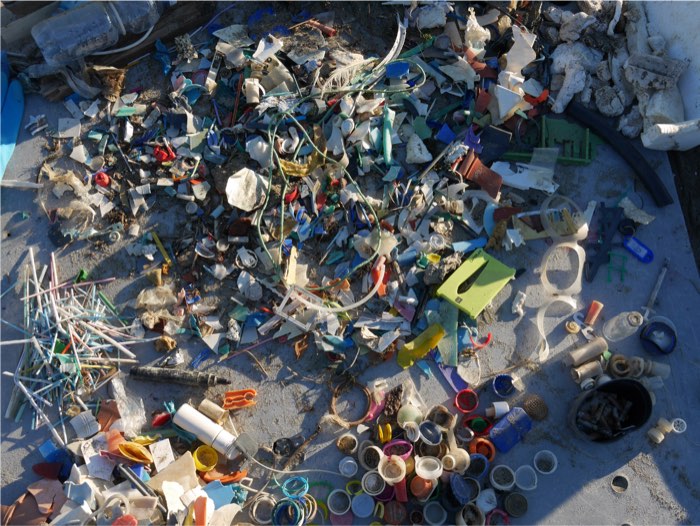
In 2019–2020, the first survey of its kind on the Durance — Stop Plastiques en Méditerranée (SPEM) — laid the groundwork this project builds on. Over 34 collections, volunteers gathered and characterised more than 25,000 litter items using the OSPAR protocol: 82% was plastic, and the median abundance — 2,081 items per 100 m — was two orders of magnitude above the precautionary threshold set by the EU Marine Strategy Framework Directive (20 items/100 m). The results were published in a peer-reviewed paper.
Since then, France transposed the EU's Single-Use Plastics Directive into national law (2020), and municipalities across the region have been rolling out their own waste prevention programmes (PLPDMA). ZPLAST was designed to revisit the same sites on the Durance as five years before, in the SPEM project — using the EU Joint List of Litter Items for Macrolitter Monitoring, which explicitly includes single-use-plastic categories, to see whether any of that translates into measurable change. Two of the four sites match the project's original locations exactly, allowing direct comparison over time; the other two were adjusted for practical reasons.
Objectives
ZPLAST set out to:
- Measure change over time — produce new field data on macrolitter along the Durance, directly comparable with the SPEM baseline
- Build accountability — share the data with local stakeholders and shape advocacy tailored to each
- Foster local solutions — help territory-specific responses take shape rather than imposing ready-made ones
- Reduce waste at the source — and evaluate how well existing EU, national, regional and local policies are working
Thalassa's Contribution
As scientific coordinator:
- Protocol design — Designed the scientific protocol using the EU Joint List of Litter Items for Macrolitter Monitoring, comparable with the SPEM baseline and with the EU Marine Strategy Framework Directive (MSFD) standard.
- Field training materials — Adapted the EU protocol's official field handbook and photo identification guide into French for the volunteer teams. Both are available below.
- Citizen science training — Trained the citizen scientists of the four local associations that carried out the fieldwork — SAPN–FNE 05, FNE 04, FNE 84 and LPO PACA — so they could run the 12 collections across the four sites themselves.
- Municipal engagement — Surveyed local authorities on the environmental measures already in place against single-use plastics, using a questionnaire adapted from work by ANCI Emilia-Romagna, Italy, and presented the results to local policymakers at the project's closing meeting.
- Data analysis & publication — Analysed the field data, compared it with the SPEM baseline and with Profili Antropici's Tuscan surveys, and presented the results at the One Ocean Science Congress (Nice, 2025). The dataset is published; a peer-reviewed paper is in preparation.
Intermediate Results — One Ocean Science Congress 2025
In June 2025, Thalassa presented intermediate ZPLAST results at the One Ocean Science Congress in Nice, alongside UNOC3. Co-authored with FNE PACA, the presentation compared the new Durance data with the SPEM baseline and with Profili Antropici's Tuscan beach-litter surveys — all three using the EU Joint List of Litter Items protocol.
At every site, litter abundance remained above the MSFD threshold for Good Environmental Status. Artificial polymers were the most abundant material, and single-use plastic items featured among the top 10 litter items everywhere. For each location, the team identified existing and possible local measures to limit single-use plastic, and mapped barriers and opportunities with a SWOT analysis — reaffirming citizen science as a credible way to track whether environmental regulations are working.
Field Resources
Documents adapted into French for this project:
Guide de terrain — Joint List of Litter Items
French-language field handbook, adapted from the EU protocol, used to standardise how each collection was carried out on the riverbank.
⇩ Download PDF
Guide photo — Joint List of Litter Items
French-language photo identification guide, adapted from the EU protocol, used to help volunteers correctly categorise each item collected.
⇩ Download PDF
Survey — Environmental Measures for Local Authorities
Used to survey local authorities along the Durance watershed on the measures they already had in place against single-use plastics, and to assess the feasibility of further ones. Adapted from a questionnaire developed by ANCI Emilia-Romagna, Italy.
⇩ Download PDFRelated Projects
Two citizen science projects on plastic pollution that ZPLAST's results were compared against.
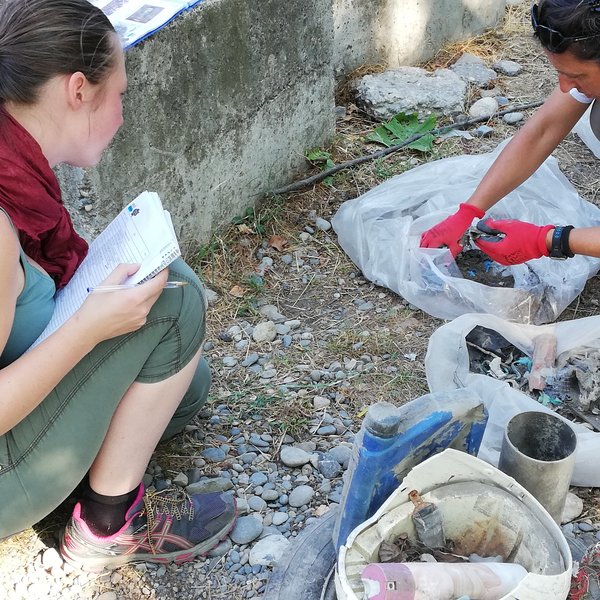
Stop Plastiques en Méditerranée (SPEM)
The 2019–2020 baseline survey that ZPLAST revisits five years later, on the same stretch of the Durance.
Profili Antropici
A parallel citizen science survey of beach litter on the Tuscan coast, Italy — surveyed with the same EU protocol, and compared side by side with ZPLAST in the OOS2025 presentation.